How to Break Up a Pu-erh Cake Without Turning It to Dust
Why a compressed cake breaks unevenly
A pu-erh cake is not a solid disc of tea. It is loose leaf that was steamed, weighed, gathered into a cloth bag and pressed — slowly under a stone for hours, or quickly in a hydraulic press. The force lands on the flat face, so the middle of the cake ends up denser than the rim, and the leaf near the surface interlocks in thin layers while the core turns tight and almost woody.
That is why the same cake behaves differently depending on where you attack it. The rim crumbles and sheds whole leaves. The center resists, and if you force it, you get powder instead of leaf. Working with the structure rather than against it is the entire technique. If you want the background on what pressing does to the tea itself, start with what pu-erh tea is.
What you need, and what to leave in the kitchen
A tea knife or a tea pick. Traditional pu-erh knives have a flat, blunt edge and a slight curve; picks are pointed and work better on very tight tuo. Either is fine. What matters is that the tool is thin enough to enter between layers and blunt enough not to slice leaf cleanly in half.
Have three things ready: a clean dry tray, dry hands, and a wrapper or small pouch for the portion you are not brewing today. Compressed tea picks up moisture and odors from skin very readily.
Leave these in the kitchen: a chef's knife, a screwdriver, a chisel, and your bare hands as the only tool. A sharp blade cuts through leaf instead of separating it, and a knife braced against your palm is how people end up in minor surgery. Snapping a cake in half looks decisive and produces a bag of fragments.
How to break up a cake, step by step
- Find the seam. A traditional cake is hollowed slightly on the back where the bag was tied. That depression marks the softer side. Lay the cake on its edge on the tray.
- Enter at the rim, not the center. Slide the blade horizontally into the side of the cake, roughly 1–2 cm in from the outer edge, parallel to the flat faces. The rim is the loosest part and will accept the tool with almost no force.
- Lever, do not twist. Once the blade is in, lift the handle gently to open a gap, then withdraw and reinsert a little further along the rim. Repeat around the circumference rather than sawing back and forth in one spot.
- Work inward in layers. Once a ring of the outer edge has lifted, follow the horizontal layers inward, taking chunks rather than reaching for the core. If the tool stops dead you have hit a dense patch — move 2 cm and try again.
- Stop while the pieces are still chunks. A piece the size of a large walnut is easy to brew and easy to put back. Keep going and you convert good leaf into fines.
If the cake has an inner ticket pressed into it, work around it. The paper is part of the provenance, and shredding it into your tea is a nuisance to pick out later.
How much to break off at once
Break what you will drink in the next few weeks, not the whole cake. As a starting point, 5–8 g of leaf suits a 100 ml gaiwan or a small glass teapot; adjust once you know how strong you like the tea. Open one section and leave the rest intact, and keep chunk sizes mixed so you have something to adjust with when the first infusion runs weak or strong.
Whole cakes are pressed partly so the leaf stays protected. Every break exposes fresh surface to air, so a fully crumbled cake ages faster and duller than one opened as needed. For brewing parameters by tea type, the brewing temperature and steeping time chart is the reference to keep open.
The other shapes: tuocha, brick and mushroom
Cakes are the most common format, but the same logic applies to every pressed shape — find the loosest face, enter at an edge, separate layers. Density is what changes.
| Format | Typical weight | Shape and density | Where to start | Effort |
|---|---|---|---|---|
| Bing (cake) | 357 g traditional; 100–500 g common | Flat disc, slight hollow at the back | Rim, blade horizontal | Moderate |
| Tuocha (bowl) | About 100 g; mini tuo 5–8 g | Domed bowl, densest of the formats | Side wall, angled upward | High on large tuo |
| Brick (zhuan) | 250 g, 500 g, 1 kg | Rectangular block, even pressure | Long edge, then layers | Moderate to high |
| Mushroom (jincha) | About 250 g | Cap on a stem, uneven density | Cap edge, away from stem | Moderate |
Treat those weights as conventions, not rules — the listing is the reliable source for the cake in front of you. Mini tuo are the exception worth knowing: at 5–8 g they are already one session, so brew them whole and give the first infusion longer.
What to do with the dust and fragments
Every cake gives up some fines, and they are not waste. They brew faster and stronger than chunks of the same tea, which makes them useful rather than annoying:
- Brew them short. Use a fine filter and cut the steep time, or the cup turns bitter and cloudy.
- Use them in a thermos or a cold brew. Long, low-agitation extraction suits fine leaf better than a quick gongfu pour.
- Keep them separate from your chunks so you can dose them deliberately instead of finding them in the pot.
Fines also finish earlier than whole leaf, so expect fewer infusions from the dusty end of the bag — the re-steeping guide by tea type explains why leaf size drives that number.
Storing the part you did not brew
Put the unbrewed chunks back with the rest of the cake and close the wrapper. Pu-erh is usually stored breathable rather than sealed airtight, so the broken pieces can simply rejoin the cake and continue aging with it; a small breathable pouch works if the original wrapper is torn.
Two things to avoid: sealing crumbs in a plastic bag for months, where they pick up plastic notes and stall, and moving the broken portion to a container with different humidity from the cake, after which the two stop tasting like the same tea. The guide to storing and aging pu-erh covers humidity and airflow in more detail.
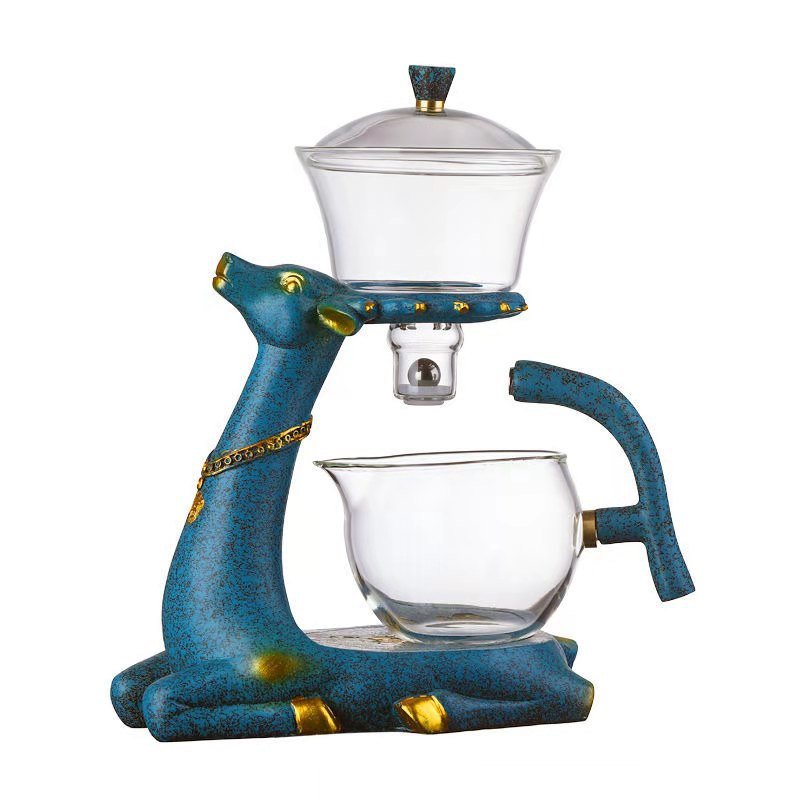
When you brew the broken leaf, vessel choice matters more than usual because the pieces are irregular. A gaiwan gives you the most control over a fast pour; a glass teapot lets you watch the chunks open and stop the infusion on colour. The trade-offs between the two are set out in gaiwan versus teapot.
Mistakes that cost you tea
- Drilling into the center first. The core is the densest part. Entering there means maximum force and maximum dust.
- Sawing instead of levering. Back-and-forth cutting shreds leaf along the blade line.
- Breaking the entire cake "to make it easier". You trade a protected cake for a bag of exposed leaf that fades within months.
- Using a sharp kitchen knife. It cuts rather than separates, and it is dangerous when the blade is pointed toward your hand.
- Discarding the fines. They are the strongest, fastest-brewing part of the cake.
Final takeaway
Breaking a pu-erh cake is a five-minute job that rewards patience more than strength. Enter at the rim with a thin blunt tool, lever along the layers, work inward, and stop while the pieces are still chunks. Keep the rest of the cake wrapped, keep the fines for short brews, and the cake will keep improving instead of drying out on your shelf.