Does Reboiling Water Affect Tea? What Actually Changes
The short answer
Boiling water again does change it, though not in the dramatic way most articles suggest. Dissolved gases leave. A little water turns to steam, so whatever was dissolved stays behind in a smaller volume. And the heating surface collects scale faster. The second effect can be calculated exactly; the third is the one that eventually shows up in your cup.
People do notice a difference with delicate tea, but it is small and comes mostly from mineral concentration rather than any mysterious quality of dead water. The one habit worth taking: empty the kettle at the end of a session and start the next with fresh water.
What boiling removes, and what it cannot
Tap water carries dissolved gases, mostly nitrogen, oxygen and carbon dioxide, plus the minerals that give it its character. Heating lowers gas solubility, so they escape as the water approaches a boil. Water that has been boiled and held hot therefore holds less dissolved gas than water just drawn. It is not empty or dead; it simply holds less gas.
Minerals behave in the opposite way. Calcium, magnesium, bicarbonate, sulphate, chloride and silica do not evaporate. When water leaves as steam, they stay in the liquid that remains. Nothing is added and nothing is destroyed. The same load is simply carried by less water.
That mechanism explains most of what people report: the flatness, the film on the surface, and a second pot from the same kettle tasting heavier than the first.
The oxygen question: measurable change, unsettled taste
The claim that repeated boiling removes the oxygen is technically grounded. Gas solubility falls as temperature rises, and it stays low while the water is hot. The leap from that fact to tea tasting flat is where the evidence thins out. Controlled comparison between water boiled once and water boiled several times is difficult to run and rarely published. More often, someone notices a difference in their own kitchen, attributes it to oxygen, and repeats the explanation until it sounds settled. It is not.
Treat oxygen as a plausible contributor rather than a proven cause. The mineral effect below is easier to reason about and easier to act on.
Minerals concentrate with every boil
Concentration follows from the volume lost. Begin with one litre and boil away a fifth, and every dissolved solid is now carried by 800 millilitres, so concentration rises by a quarter.
| Water boiled off | Left in the kettle | Concentration of dissolved solids |
|---|---|---|
| 10% | 900 ml | 1.11 times |
| 20% | 800 ml | 1.25 times |
| 30% | 700 ml | 1.43 times |
| 50% | 500 ml | 2.00 times |
The table describes one heating cycle from a full kettle. Two things moderate it: topping up with fresh water dilutes the load back toward tap level, and scale formation pulls some calcium carbonate out before it reaches your cup. Neither cancels the effect; both explain why the difference is usually modest.
Hard water starts from a higher baseline, so the same percentage increase lands harder. If you have never worked out what your water contains, do that before blaming the kettle. What water quality does to tea covers hardness, alkalinity and chlorine.
What it does to the kettle
Calcium carbonate becomes less soluble as water heats, which is why scale forms on hot surfaces rather than in the cold tank. Every boil leaves a thin film; over weeks it thickens into a visible ring.
Scale matters for two reasons. It insulates the element, so the kettle boils more slowly and holds temperature less evenly. And in a kettle with a temperature selector, a heavily scaled element can overshoot the set point, quietly breaking the temperatures you thought you were following. Flakes of scale also end up in the water, visible as fine dust at the bottom of a glass body.
A chalky line at the waterline is the simplest diagnostic available to you. It tells you the water is hard, and that reboiled water in that kettle carries more mineral load than fresh water would.
How it changes the brew
Higher mineral concentration mutes aroma and rounds off the edges of a light tea. The effect is not uniform: it scales with how delicate the tea is and how much leaf you use.
| Tea | How much reboiled water shows | Why |
|---|---|---|
| Silver needle, early spring green | Most noticeable | Light aromatics and low leaf mass, so water character sits on top of the tea |
| Scented green, light oolong | Noticeable | The floral top note is the first thing mineral load flattens |
| Black tea, roasted oolong | Barely detectable | Roast and oxidation produce aromas that dominate the water |
| Pu-erh, aged teas | Not detectable in practice | Body and earth notes sit far above the water signal |
So reboiled water is a poor match for teas where aroma is the point, and close to irrelevant where body and roast dominate. Temperature compounds it: water held hot for an hour is not at the temperature the display claims, and a scaled element adds its own error. If you rely on a setting, check it against the brewing temperature and steeping time chart.
How to test it in your own kitchen
A comparison you can trust needs one variable. Use two identical vessels, equal leaf weight, equal water volume and equal steep time. Water A is fresh from the tap and boiled once. Water B has been boiled three times, or boiled once and held hot for an hour. Cool both to the same temperature and serve in identical unmarked cups.
Smell first, then taste, then wait for the finish. Run it on three separate days, because a single pour tells you more about your mood than about the water. Many people cannot separate the cups. That is a legitimate result, not a failed test, and worth knowing before you spend money on a problem you may not have.
Habits that make the question moot
The fix is mechanical rather than technical, and it costs nothing.
- Boil only the water you are about to pour. A kettle boiled half full concentrates what is in it far more than a full one.
- Empty the kettle when you finish. Water left overnight is the start of tomorrow's reboiled load.
- Do not park water on a warmer for hours. For a second pot, keeping tea warm without ruining it beats holding the kettle at temperature.
- Between infusions, draw fresh water rather than topping up a part-full kettle. If you already re-steep the same leaf, how many steeps each tea type gives sets what fresh water each round is worth.
- Descale when you see a ring, not on a calendar. The ring is the schedule.
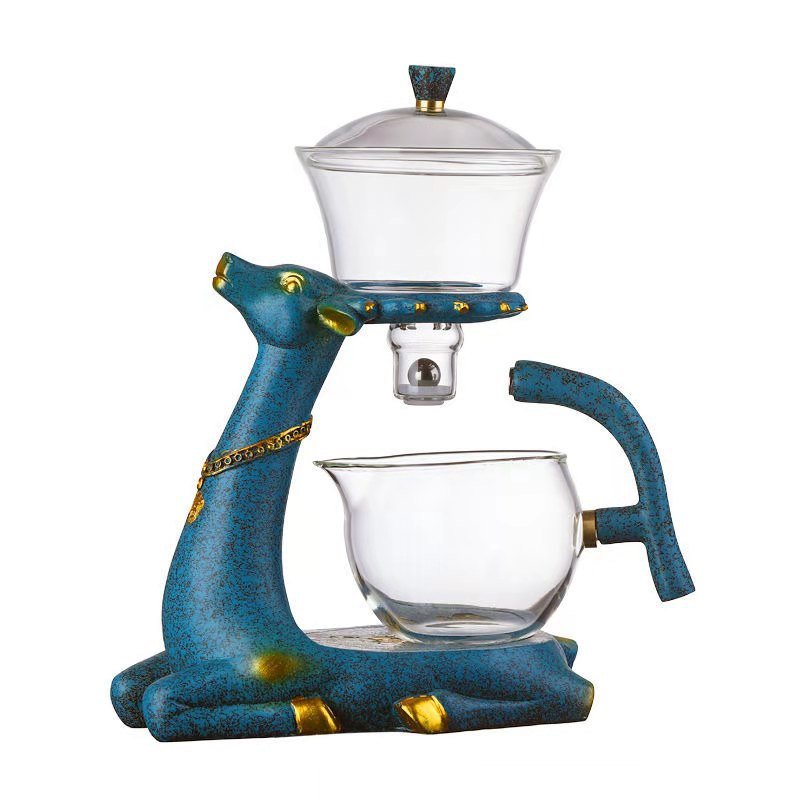
- Use a body you can see through, so scale and cloudiness are visible before they reach the cup. A glass teapot or kettle makes the water part of what you are watching.
When it does not matter, and what matters more
With roasted oolong, black tea or pu-erh, the effect sits well below the resolution of the cup. It matters even less if your water is already soft, because a low baseline has little to multiply. And it matters least when the rest of your method is loose: leaf quality, ratio and steep time all move the result further than the age of the water does. Get those right first. Then, if you still taste something flat in a delicate green, look at the kettle.
Reboiling water is a small, well-understood effect that is usually described as a large mysterious one. Gases leave, minerals concentrate, scale builds, and the tea that notices first is the lightest one you own. Start each session with fresh water, boil what you need, and keep your attention for the leaf and the timing, which decide far more of the cup.