Which Teas Take Milk? A Practical Guide by Type
Milk in tea is usually treated as a compromise, something you do to a cup that is too strong or too rough to drink plain. It is more useful to think of it as a different drink. Milk adds fat, protein, sugar and water: it coats the palate, softens astringency, adds body, and mutes the volatile aromas that make delicate teas worth drinking.
So the question is not whether milk belongs in tea, but which teas still taste like themselves once it is in the cup. That comes down to how much body the liquor has, and how much of the tea's identity lives in aroma rather than in taste.
What milk actually does to a cup
It dilutes. Every millilitre of milk replaces tea. A cup brewed at normal drinking strength goes thin the moment milk is added, which is why most disappointing milk teas are weak rather than milky.
It coats. Fat and protein spread across the tongue, reducing the dry grip tea drinkers call astringency and making the cup feel rounder and sweeter. This is the effect most people are actually after.
It masks. Floral, citrusy and fresh notes are volatile, and fat carries aroma away from the surface of the drink. A tea built on top notes loses them faster than it loses strength. A tea with strong body and modest aroma survives; a tea whose whole appeal is aroma does not.
Which teas take milk: the short answer
The table is a starting point, not a standard. Gram weights assume loose leaf, and the milk column assumes 150 ml of finished tea.
| Tea type | Milk | What survives | Leaf / 150 ml | Water | Milk added |
|---|---|---|---|---|---|
| Assam, broken-leaf black | Yes | Malt and body; the classic breakfast base | 5 g | 95-100 °C | 30-50 ml |
| Ceylon black | Yes | Clean structure and briskness without going flat | 5 g | 95-100 °C | 30-40 ml |
| Chinese black (Dianhong, Keemun) | Yes, less | Cocoa and stone fruit, though the detail fades | 4-5 g | 90-95 °C | 20-30 ml |
| Roasted oolong (Da Hong Pao) | Sometimes | Toast and roast read through milk | 6 g | 95-100 °C | 30-40 ml |
| Ripe pu-erh | Sometimes | Earth and thickness; a regional habit, not a rule | 7 g | 100 °C | 30-50 ml |
| Matcha | Yes, as a base | The whole leaf, so little is lost to dilution | 2 g powder | 80 °C, 60 ml | 120 ml |
| Hojicha | Yes | Roast, with little astringency to begin with | 4 g | 90 °C | 40-60 ml |
| Light oolong (Tieguanyin) | Rarely | Little: the floral top note leaves first | 5 g | 90 °C | 0-10 ml |
| Green tea | Rarely | Freshness and savoury depth flatten quickly | 3 g | 75-80 °C | 0 ml |
| White tea | No | Delicate sweetness is overwhelmed | 4 g | 85 °C | 0 ml |
| First-flush Darjeeling, jasmine, scented teas | No | Aroma is the entire point of the tea | 4 g | 85-90 °C | 0 ml |
Treat the last three columns as a ratio to adjust, not a recipe to follow. If the leaf is old or the milk is rich, add leaf before you add time: longer steeping pulls more astringency, and astringency is what the milk was meant to soften.
Why black tea is the default
Fully oxidised leaf carries more colour, body and malt-cocoa character than milk can cover. That is structural rather than fashionable, and why nearly every traditional milk tea culture built its everyday cup on black leaf.
Format matters too. Broken leaf, the cut pieces in most tea bags, gives up colour and strength in two or three minutes, which is about what a milky cup needs. Whole-leaf orthodox black is cleaner and less blunt but needs more leaf. The difference between the two is covered in black tea vs green tea.
How well a tea takes milk says nothing about its quality. Excellent black teas are wasted under milk; ordinary ones are built for it.
The teas that lose the most
Green tea, white tea, first-flush Darjeeling, jasmine and light oolong share a problem: their identity sits in the top notes, the first thing milk removes. What remains is mild, sweet and faintly vegetal.
White tea is the clearest loss: soft sweetness and a light texture that only read clearly when nothing else is in the cup.
Green tea behaves the same way, with one exception. Matcha is a suspension of the leaf rather than an infusion, so the flavour is far more concentrated and survives milk. If you want milk and something green, pick matcha or a roasted Japanese tea.
Roasted oolong and ripe pu-erh: the non-black options
After malt, roast is the second character that reads clearly through milk. A dark oolong such as Da Hong Pao has toast, cocoa and a drying finish that milk rounds off without erasing. A light Tieguanyin or a floral Dan Cong depends on aroma and will be buried; the oolong guide covers both ends of that range.
Ripe pu-erh is the other credible non-black base: thick, dark, earthy, closer to broth than to a light infusion, and a standard base in Hong Kong style tea cafes. Tibetan butter tea goes further, churning tea with butter and salt rather than sweet milk.
Matcha and hojicha work the other way round
With these two, milk is the base and tea is the concentrate. You are not adding milk to a cup of tea; you are making a small amount of very strong tea and using milk as the body.
For matcha, whisk about 2 g of powder with 60 ml of water at roughly 80 °C until smooth, then pour it over 120 ml of milk. Whisking first matters, or the powder clumps on the surface. For hojicha, brew 4 g in 150 ml at about 90 °C for two minutes and add 40-60 ml of milk; roast leaves little astringency, so a generous ratio stays smooth.
How to adjust a cup you already like
Most milk teas that disappoint are under-brewed rather than over-milked. Four adjustments fix most of them.
- Add leaf, not time. Going from 5 g to 7 g per cup raises concentration without the extra astringency a long steep brings.
- Use less water. Filling the cup to the brim before adding milk dilutes the tea twice.
- Warm the milk. Cold milk drops the temperature and makes the cup feel thin even at the right strength.
- Choose milk for texture. Whole milk is roundest, oat adds sweetness of its own, and soy can read beany against a delicate tea.
Water matters too. Hard or heavily mineralised water changes how much of the leaf you extract, and the effect is magnified when you brew strong for milk. Water quality and tea taste covers it, and the brewing temperature and steeping chart is the reference for plain brewing.
What to brew it in
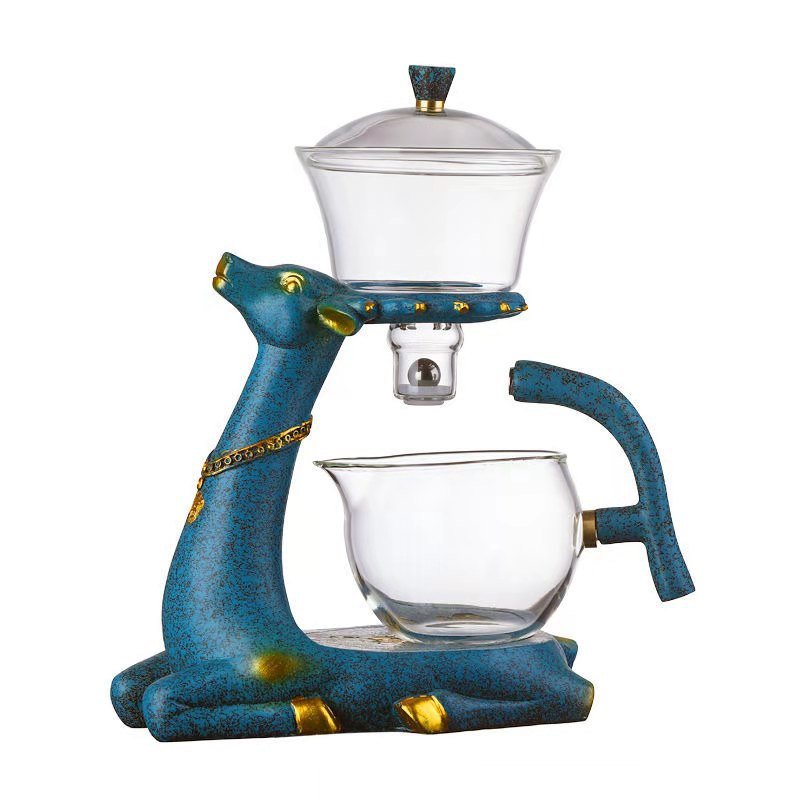
Vessel choice here is about control and cleaning, not ceremony. A glass teapot is useful for an unglamorous reason: colour is the easiest way to judge whether the liquor is strong enough before the milk goes in, and visible leaf tells you whether you need a finer strainer.
Unglazed clay is the wrong choice. It holds oils and aroma from earlier sessions, an advantage for plain tea and a liability once milk and sugar are involved.
A plain Ceylon is the least risky black to calibrate against, because its structure is clean and predictable. A plain Ceylon black makes a reasonable reference cup.
A short checklist before you pour
- Is the tea built on body (black, roasted oolong, ripe pu-erh) rather than aroma (green, white, first flush, jasmine)?
- Did you increase leaf rather than steeping time?
- Is the liquor strong enough to still taste of tea at a one-to-four milk ratio?
- Is the milk warm?
- Would the tea be better without milk at all? For some teas the answer is yes.